
In the process of ultra-high voltage (UHV) power grid construction, the 500kV receiving-end power grid (typically in economically developed regions such as East China) faces increasingly prominent problems of excessive short-circuit current due to dense grid structure and highly concentrated power load. Traditional current-limiting measures, such as line disconnection and bus splitting, often damage the original power flow distribution of the power grid, leading to decreased stability and difficulty in adapting to complex power grid operation requirements. Reactor (mainly a series reactor), relying on its core characteristics of precise current limiting and low interference, has become the preferred core equipment to solve this industry pain point. Combining the two benchmark engineering cases of Shanghai 500kV Sijing Substation and Yangxing Substation, this article will deeply elaborate on the system design key points, key parameter selection logic and actual engineering application effects of reactors in 500kV power grids, comprehensively demonstrating how reactors can efficiently ensure the safe, stable and economic operation of UHV power grids through scientific design and precise deployment.

I. Reactor: The "Safety Barrier" for Reactor Short-Circuit Current in 500kV Power Grid
As the core hub of China's power transmission network, the 500kV power grid undertakes the key mission of cross-regional large-capacity power transmission, and its operational stability is directly related to the safety of the entire power system. Once the short-circuit current exceeds the standard, it will not only exceed the interrupting capacity of core power equipment such as circuit breakers, leading to equipment burnout and damage, but also may trigger chain faults and cause large-area power outages. The core working principle of the reactor is to utilize the characteristic of inductive components to impede current changes. Being connected in series to the power grid line, it increases the impedance value of the short-circuit loop, thereby effectively limiting the sudden change amplitude and peak value of the short-circuit current. Based on this core principle, the core value of the reactor is concentrated in the following three key dimensions, constructing a solid short-circuit current safety protection system for the 500kV power grid:
1. Reactor Precise Current Limiting: Building a Solid Safety Barrier for Equipment
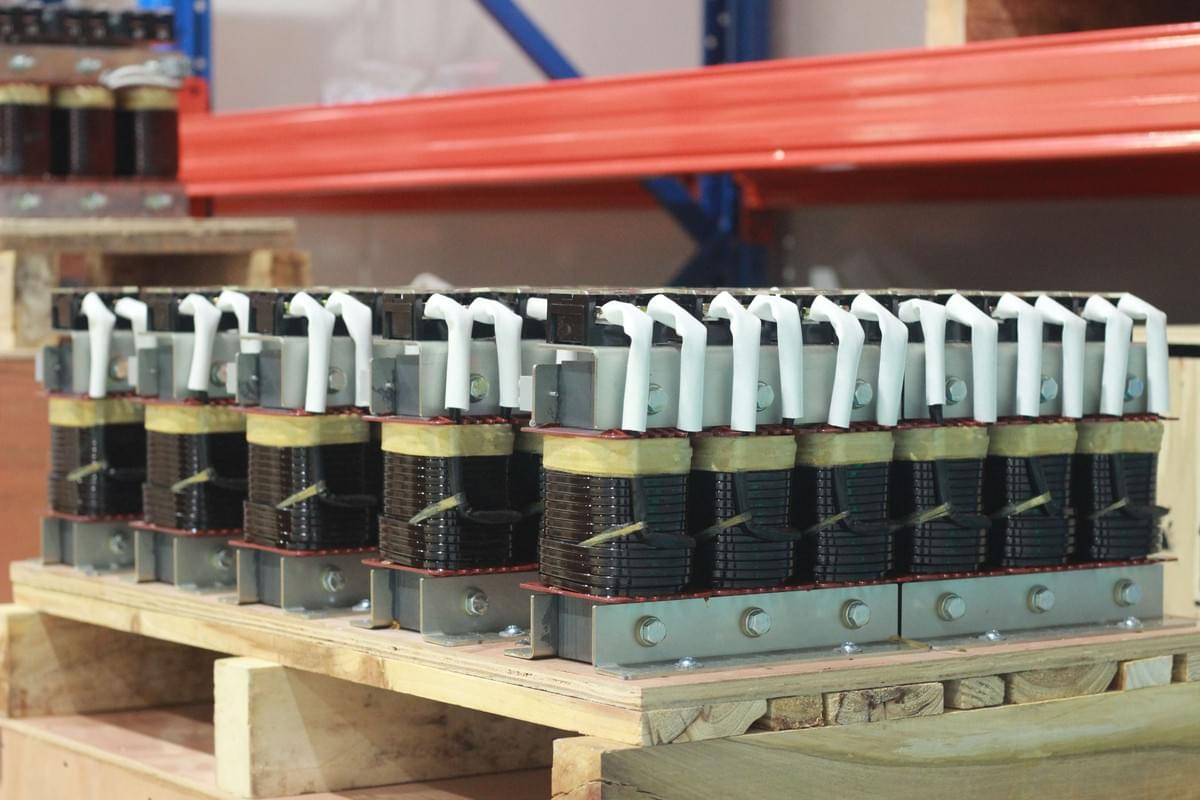
After the reactor is connected in series to the power grid line, its inductive impedance is directly superimposed on the short-circuit loop, significantly increasing the total loop impedance, and then precisely controlling the short-circuit current within the safe range of the circuit breaker's interrupting capacity. Taking the reactor application project of Shanghai 500kV Yangxing Substation as an example, due to the growth of power grid load, the short-circuit current of Gulu Substation around this substation had exceeded the rated interrupting capacity of the circuit breaker, posing a serious safety hazard. By accurately installing a 28Ω reactor in the Yangxing-Wai'er Corridor, the short-circuit current of Gulu Substation was successfully reduced from the original excessive value to a safe level, with a safety margin of not less than 10%. This not only completely avoided the damage risk of circuit breakers caused by current overload, but also reduced the frequency and cost of daily equipment operation and maintenance, extending the service life of core power equipment. It is worth noting that the reactor selected here is an oil-immersed series reactor, which has the advantages of low loss, good heat dissipation performance and adaptability to harsh outdoor environments, fully matching the operation requirements of 500kV outdoor power grids.
2. Reactor Low-Disturbance Operation: Maintaining Power Grid Stability Characteristics
Unlike traditional current-limiting measures such as line disconnection and bus splitting that require significant modifications to the original topology of the power grid, the reactor only needs to be connected in series to the designated line without changing the core structure and power flow direction of the power grid. It can precisely limit the short-circuit current while maximizing the rationality of the original power flow distribution. A large number of engineering practice data show that the impact of reactors with precise parameter selection on the steady-state power flow of the power grid can be strictly controlled within 5%, which is much lower than the power flow disturbance amplitude of more than 15% of traditional measures, effectively ensuring the continuity and stability of power transmission. Taking Shanghai 500kV Sijing Substation as an example, after the 14Ω reactor was installed and put into operation, the power flow distribution of the surrounding lines only had a slight fluctuation of 2.3%, which was completely within the allowable range of safe operation of the power grid. It not only solved the problem of excessive short-circuit current, but also did not affect the normal power supply in the region.
3. Reactor Long-Term Adaptability: Considering the Whole-Life Cycle Requirements
The design of high-quality reactors should adhere to the whole-life cycle concept, fully considering the changes in the power grid operation mode at the current stage, transition period and long-term future, ensuring that it can not only solve the current short-circuit current problem, but also flexibly adapt to the future load growth and grid upgrading needs. The reactor application case of 500kV Sijing Substation fully confirms this point. Within 5 years after the reactor installed at this substation was put into operation, it experienced 3 regional power grid upgrades and 2 load expansions. Due to sufficient parameter adaptation space reserved in the initial design stage, the reactor has always maintained an efficient operation state without any targeted modification. Compared with the frequent adjustments required by traditional current-limiting measures, it has significantly reduced the investment cost of the equipment's whole life cycle. This long-term adaptability design has also become one of the important advantages of reactors widely used in UHV power grids.
II. Reactor System Design: Five Core Dimensions of Reactors in 500kV Power Grid
The design quality of the reactor directly determines its current-limiting effect and compatibility with the power grid, which is the core prerequisite for ensuring the success of the project. The entire design process needs to be accurately planned around five core dimensions: installation location, resistance value, rated current, reactive power compensation and additional design, combining multiple factors such as power grid short-circuit current calculation data, load characteristics and operation mode. Each link must strictly balance technical feasibility and engineering economy to ensure that the reactor can not only exert the optimal current-limiting efficiency, but also control the project investment and operation loss:

1. Reactor Installation Location: Locking the Focus of Short-Circuit Current Control
The scientific selection of installation location is the primary link in reactor design, which directly affects the current-limiting effect and engineering implementation difficulty. It is necessary to make scientific decisions by comprehensively considering multiple factors such as power grid topology, short-circuit current distribution, line power flow and construction conditions. The specific decision-making logic and implementation steps are as follows:
- First, conduct a comprehensive short-circuit current calculation to locate the over-standard substations and control focuses (power collection points, main corridor hubs or high-load density areas);
- Prioritize the lines with the largest branch short-circuit current; if the currents are similar, select the lines with small power flow, low current-carrying capacity and superior construction conditions;
- Taking the reactor of Shanghai 500kV Yangxing Substation as an example, to solve the excessive short-circuit current of Gulu Substation, it was finally installed in the Yangxing-Wai'er Corridor, which not only ensures the control effect, but also avoids the site restrictions of the power plant and does not affect the normal operation of the power plant. points
2. Reactor Resistance Selection: Balancing Current-Limiting Effect and Power Grid Impact
Resistance value is one of the core design parameters of the reactor. Its selection needs to find the optimal balance between "effective current limiting" and "low operation loss", avoiding the problems of "insufficient current limiting" or "excessive loss". The specific selection logic and engineering practice are as follows:
- Core principle: The resistance value should be large enough to ensure that the short-circuit current is controlled below the interrupting capacity of the circuit breaker with a margin reserved; at the same time, the smallest possible resistance value should be selected to reduce the impact of reactive power loss and voltage drop on the power grid;
- Engineering example: Sijing Substation selected a 14Ω reactor, while Yangxing Substation adopted two 14Ω reactors in series (total 28Ω) due to the need for a higher current-limiting margin, which not only met the current-limiting requirement of ≥24Ω, but also reduced the manufacturing difficulty and cost by using mature equipment. Different resistance values have a significant impact on the short-circuit current; the larger the resistance value, the better the current-limiting effect, but it needs to be controlled within a reasonable range.
3. Reactor Rated Current: Adapting to Short-Term and Long-Term Power Grid Operation Modes
The selection of rated current is directly related to the safe operation and service life of the reactor. It must be strictly matched with the transmission capacity of the corresponding line, and sufficient space for future load growth should be reserved to avoid the reactor being unable to meet the operation requirements due to load expansion. The specific selection standards and cases are as follows:
- Basic requirement: Not lower than the rated current of the corresponding line, adapting to multiple operation modes;
- Yangxing Substation case: The rated current of the original line is 2.4kA, but considering future load growth and power grid operation uncertainty, the rated current of the reactor is selected as 3kA, which meets the 80℃ conductor temperature operation requirement after conductor upgrading and adapts to multiple short-term and long-term working conditions.
4. Reactor Reactive Power Compensation: Offsetting Losses to Ensure Power Grid Balance
Reactors will generate a certain amount of reactive power loss during operation, and this loss is proportional to the square of the line transmission power. When the line transmission power is large, the reactive power loss of the reactor will increase significantly, thereby affecting the reactive power balance of the regional power grid. Therefore, targeted reactive power compensation schemes must be matched. The specific analysis and measures are as follows:
- Data reference: When the 28Ω reactor has a line transmission power of 2600MVar, the reactive power loss reaches 760MVar, which will affect the regional reactive power balance;
- Compensation measures: Combined with the regional reactive power support conditions, additional low-voltage reactors are installed. Both Sijing Substation and Yangxing Substation have added 2-3 groups of low-voltage reactors, which effectively offset the reactive power loss of the reactor and maintain the reactive power balance of the power grid.
5. Reactor Additional Design: Improving Reliability and Operational Flexibility
In addition to core parameters such as installation location, resistance value and rated current, the additional design details of the reactor also directly affect its operational effect, reliability and flexibility. It is necessary to comprehensively plan in combination with power grid operation requirements and equipment safety standards. The specific design points are as follows:
- Electrical calculation: Complete calculations such as short-circuit current, power flow, and transient stability to comprehensively verify the impact of the reactor on the power grid;
- Equipment parameters: Clarify indicators such as rated capacity, dynamic stability current and thermal stability current to ensure that the equipment can withstand power grid impacts;
- Electrical wiring: Install bypass disconnecting switches on both sides to improve operational flexibility, and set up standby phases to enhance reliability, in line with the design specifications of the US PJM power grid.
III. Engineering Effectiveness: Prominent Application Value of Reactors in 500kV Power Grid
The scientificity of theoretical design must ultimately be verified through practical engineering applications. Taking the reactor application projects of Sijing Substation and Yangxing Substation in Shanghai's 500kV power grid as examples, both projects have achieved remarkable results after being put into operation, fully verifying the scientificity and practicality of the reactor design scheme with detailed operation data. The specific effectiveness is reflected in the following three aspects:
1. Reactor Current Limiting Up to Standard: Comprehensive Implementation of Short-Circuit Current Control
Post-commissioning data monitoring shows that the short-circuit current of previously over-standard substations, such as Gulu Substation and the surrounding areas of Sijing Substation, has been accurately controlled within the safe range of the circuit breaker's interrupting capacity. Among them, the short-circuit current of Gulu Substation has decreased from 52kA to 38kA, and the short-circuit current of lines around Sijing Substation has decreased from 48kA to 35kA, both meeting the requirements of safe power grid operation. The current-limiting effect of the reactor is stable and reliable, and no equipment hidden dangers or operation alarms caused by excessive current have occurred since it was put into operation, which has significantly reduced the operation pressure of core equipment, such as circuit breakers and built a solid line of defense for the safe and stable operation of the 500kV power grid.
2. Reactor Stabilizing Grid and Improving Efficiency: Continuous Improvement of Power Grid Stability
As mentioned earlier, the reactor does not need to change the original topology of the power grid, and its impact on the power flow distribution of the power grid after commissioning is minimal. Actual operation data shows that after the installation of reactors in Sijing Substation and Yangxing Substation, the power flow fluctuation of the surrounding lines is controlled within 3%, and the transient stability level of the power grid remains consistent with that before installation. No voltage fluctuation, frequency deviation or other problems caused by power flow disturbance have occurred. This advantage enables the reactor to effectively ensure the continuity and reliability of power transmission while solving the problem of excessive short-circuit current, avoiding the power grid instability risk that may be caused by traditional current-limiting measures.
3. Reactor Economic Adaptability: Prominent Economy and Scalability
From the perspective of engineering economy, compared with traditional current-limiting schemes such as line reconstruction and circuit breaker replacement, the initial investment of the reactor project is lower, and the operation and maintenance costs are more controllable. Taking the reactor project of Shanghai 500kV Yangxing Substation as an example, its total investment is about 40% less than that of the traditional line reconstruction scheme, and the supporting reactive power compensation scheme effectively reduces the operation loss of the reactor. It is estimated that the substation can reduce electrical energy loss by more than 3 million kWh per year, equivalent to economic benefits of more than 2 million yuan. At the same time, due to sufficient adaptation space reserved in the initial design stage of the reactor, there is no need to replace the reactor equipment when the regional load grows and the power grid is upgraded in the future. Only the supporting reactive power compensation scheme needs to be adjusted, which has strong scalability and further reduces the long-term upgrading and reconstruction cost of the power grid.
IV. Reactor Selection and Operation & Maintenance: Key Notes for Safe Operation of Reactors in 500kV Power Grid
1. Reactor Selection Preparation: Three Core Preparatory Work
- Harmonic and load detection: Comprehensively grasp the power grid short-circuit capacity, harmonic background and load characteristics to provide an accurate basis for parameter calculation;
- Multi-scheme simulation comparison: Through simulation to simulate the current-limiting effect and power grid impact under different parameters, select the optimal reactor scheme;
- Manufacturer resource docking: Combine the existing equipment manufacturing capacity of manufacturers to ensure that the selected reactor parameters have engineering feasibility and control procurement and manufacturing costs.
2. Reactor Operation & Maintenance Focus: Ensuring Long-Term Stable Operation
- Regular monitoring: Detect the operating temperature, vibration and insulation status of the reactor quarterly, and timely clean the surface debris to ensure unobstructed heat dissipation;
- Parameter verification: Regularly verify the deviation between the actual parameters of the reactor and the design values, and adjust the compensation scheme promptly if the power grid operating conditions change;
- Prohibition of arbitrary modification: For the commissioned reactor, do not arbitrarily change the installation location or add/remove supporting equipment to avoid damaging the matching relationship with the power grid.
3. Reactor Technology Trend: Intelligence and Miniaturization Upgrade
With the transformation of the power system towards intelligence and digitization, the technological development of reactors also presents obvious trends of intelligence and miniaturization. In terms of intelligence, future reactors will deeply integrate the Internet of Things (IoT), big data and artificial intelligence (AI) technologies. By installing temperature sensors, vibration sensors, insulation monitoring sensors and other equipment on the reactor body, real-time monitoring, data collection and remote transmission of operating status can be realized; at the same time, through the analysis of monitoring data by AI algorithms, potential fault risks of the reactor can be predicted in advance, realizing fault early warning and intelligent diagnosis, and greatly improving the intelligent level of reactor operation and maintenance. In terms of miniaturization, by adopting new high-permeability iron core materials, optimizing coil structure design and other technical means, the volume and weight of the reactor can be significantly reduced on the premise of ensuring unchanged reactor performance parameters, reducing installation space requirements, adapting to more complex power grid installation scenarios, and further improving the operating efficiency and reliability of the reactor.
V. Conclusion: Reactor Empowers the Safe and Efficient Development of Reactors in 500kV Power Grid
As the core key equipment for short-circuit current control in 500kV power grids, the scientific design and precise application of reactors are important supports for ensuring the safe, stable and economic operation of power grids. From the engineering practice of Shanghai Sijing Substation and Yangxing Substation, through the precise planning of reactor installation location, resistance value and rated current, as well as the scientific implementation of supporting reactive power compensation schemes, reactors can not only efficiently solve the core pain point of excessive short-circuit current, but also minimize the impact on power grid operation, balancing technical feasibility and engineering economy. Against the background of the continuous expansion of UHV power grid scale, increasing load and increasingly complex grid structure, the technical advantages and application value of reactors will become more prominent, becoming an important guarantee for promoting the safe and efficient development of UHV power grids.

At present, China's power system is in a stage of rapid upgrading and transformation. The construction and reconstruction demand of 500kV and above UHV power grids continues to grow, and the problem of short-circuit current control will also become a core challenge faced by more power grid projects. In this context, the importance of reactors has become increasingly prominent. If your power grid has problems such as excessive short-circuit current, high equipment operation pressure and unreasonable power flow distribution, please feel free to inform us of the power grid voltage level, specific short-circuit current value, core load characteristics and transformation needs. Relying on our professional reactor technology R&D team and extensive engineering practice experience, HengRong Electric CO., LTD. will customize an exclusive reactor system design scheme for you, covering the entire process, including parameter selection, installation planning, and reactive power compensation matching, to help your power grid achieve safe upgrading and efficient operation.