
With the continuous expansion of power system scale and the rapid growth of renewable energy integration, especially in the receiving-end power grids of economically developed regions such as East China, the 500kV power grid features a dense structure, a complex framework, and high load concentration. The short-circuit current level on 500kV busbars in hub substations of the main ring network has been rising year by year, and some key substations have exceeded the rated interrupting capacity of circuit breakers (typically 50 kA or 63 kA), posing a severe threat to grid equipment safety and stable operation. Traditional measures such as line disconnection, jumper modification, and busbar splitting directly alter the original grid topology, leading to unreasonable power flow distribution, reduced transmission capacity, and weakened system stability. Series reactors, as a core solution for short-circuit current limitation with the advantages of precise control, minimal grid disturbance, and flexible deployment, have been increasingly adopted in the planning and renovation stages of receiving-end power grids with tight short-circuit current constraints. Based on practical commissioned projects like the 500kV Sijing Station and Yangxing Station in Shanghai Power Grid, this article details the system design methods, key technical parameters, and engineering application effects of 500kV series reactors, providing valuable technical reference for their widespread promotion and application.
I. Series Reactors: Core Equipment for 500kV Grid Short-Circuit Current Control
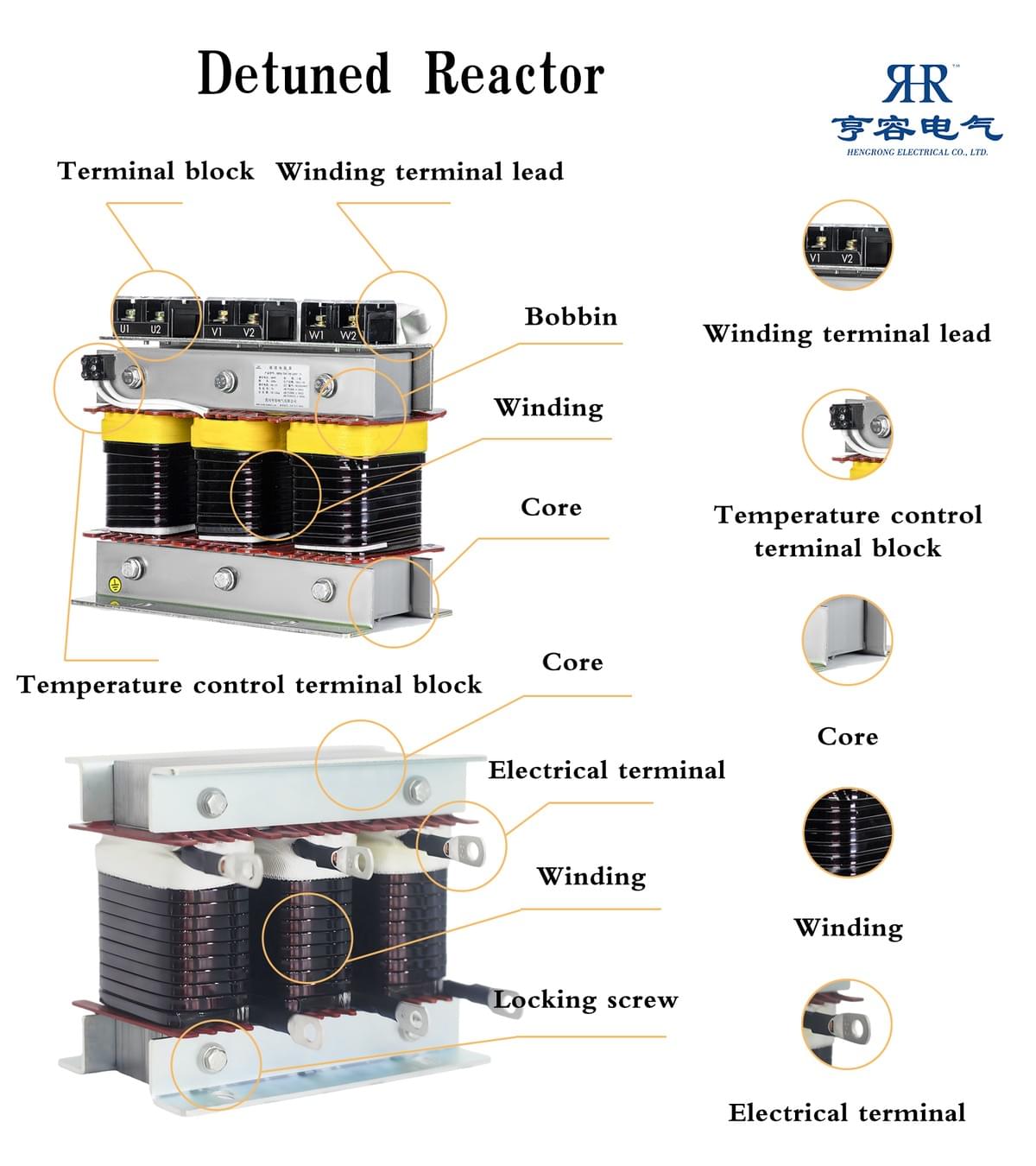
Series reactors, as inductive components connected in series with power lines, play an irreplaceable role in 500kV power grids by addressing short-circuit current overrun issues while minimizing negative impacts on normal grid operation:
1. Precise Short-Circuit Current Limitation
The core working principle of series reactors lies in increasing the impedance of short-circuit loops. When a short-circuit fault occurs in the grid, the reactor’s inductive reactance restricts the rate of current rise and limits the peak short-circuit current within the safe interrupting capacity of circuit breakers. For example, the 28Ω series reactor installed at the 500kV Yangxing Station in Shanghai successfully reduced the three-phase short-circuit current at the nearby 500kV Gul Road Station from 68kA (exceeding the 63kA breaker limit) to 59kA, with a sufficient safety margin of 6.3%, completely eliminating the risk of circuit breaker explosion or damage due to overload during fault conditions.
2. Minimal Grid Disturbance
Unlike traditional measures that disrupt the original grid structure, series reactors maintain the integrity of the power transmission network and have a negligible impact on steady-state power flow. Engineering operation data shows that properly selected and configured series reactors affect the grid’s steady-state power flow by less than 5%, far lower than the 15%+ disturbance caused by conventional methods such as line splitting. This advantage ensures that the grid’s voltage quality, frequency stability, and power supply reliability remain unchanged while achieving short-circuit current limitation.
3. Adaptability to Long-Term Development
High-quality series reactors are designed with a forward-looking perspective to accommodate current, transitional, and long-term grid operation modes. During the design phase, factors such as future load growth, new power plant connection, and grid structure optimization are fully considered to ensure that the reactor’s performance parameters (e.g., resistance value, rated current) can adapt to changes in grid conditions over 15-20 years. For instance, the series reactor at 500kV Sijing Station, put into operation in 2018, has remained fully operational through three rounds of grid upgrades and load increases, without the need for repeated modification or replacement, significantly reducing the full-lifecycle investment and maintenance costs of the power grid.
II. System Design of Series Reactors: Five Core Dimensions for 500kV Grids
The performance and application effect of series reactors in 500kV power grids depend on precise design across multiple key dimensions, integrating technical requirements, engineering feasibility, and economic benefits:
1. Selection of Installation Location
The selection of the installation site is a critical prerequisite for ensuring the effectiveness of series reactors, requiring a comprehensive analysis of multiple factors:
- First, conduct full-scale short-circuit current calculations for the entire grid to identify substations with overrun short-circuit current and key control focuses, such as power collection points of large power plants, hub nodes of trunk transmission corridors, and high-load-density urban core areas.
- Prioritize installing reactors on lines with the largest branch short-circuit current contribution to the overrun substation; for lines with similar current levels, select those with lower normal power flow, sufficient current-carrying capacity margin, and favorable construction conditions (e.g., sufficient site space, convenient transportation for equipment installation).
- Case Example: To address the short-circuit current overrun at Gul Road Station, the series reactor at Yangxing Station was finally installed on the Yangxing-Waier 500kV transmission corridor after multiple rounds of simulation and verification. This choice not only achieved the optimal short-circuit current limitation effect but also avoided operational disruptions to the nearby Waier Power Plant, optimized the power flow distribution of the East China 500kV ring network, and reduced the construction difficulty and cost by leveraging the existing line corridor and station space.
2. Resistance Value Selection
The resistance value of series reactors is a key parameter that balances short-circuit current limitation effect and grid economic operation, determined by the following principles:
- Core Principle: On one hand, the resistance value must be sufficient to limit the short-circuit current to below the circuit breaker’s interrupting capacity with a reasonable margin (usually 5%-10%); on the other hand, it should be as small as possible to reduce reactive power loss, voltage drop, and energy waste during normal operation.
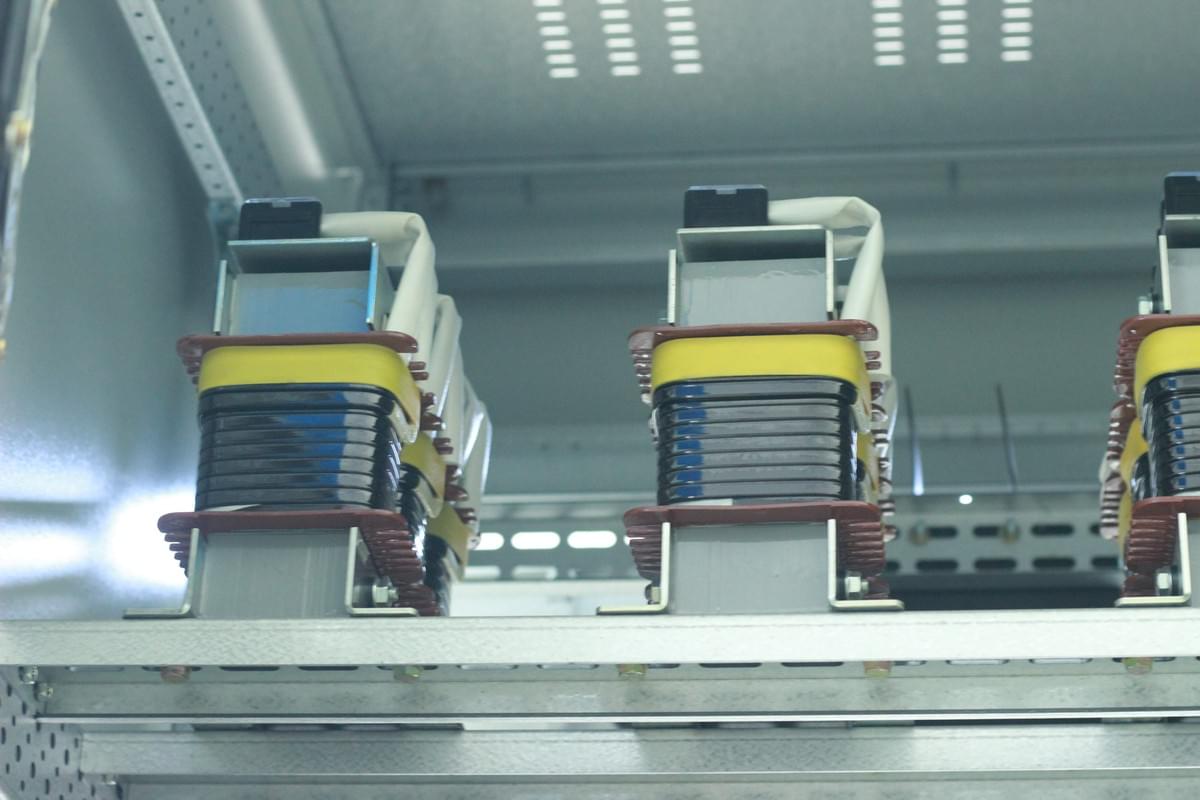
- Engineering Practice: For the 500kV Sijing Station project, a 14Ω series reactor was adopted based on grid simulation results, which reduced the target substation’s short-circuit current from 65kA to 58kA while controlling the reactive power loss to within 3% of the line’s rated power. For Yangxing Station, due to the higher short-circuit current level at Gul Road Station, two 14Ω reactors were connected in series to achieve a total resistance of 28Ω, meeting the requirement of ≥24Ω for effective current limitation. This configuration not only ensured the limiting effect but also leveraged mature manufacturing processes for 14Ω reactors, reducing equipment procurement costs and delivery cycles.
3. Rated Current Determination
The rated current of series reactors must be matched with the maximum operating current of the corresponding transmission line and reserved with sufficient margin to accommodate future load growth and abnormal operation conditions:
- Basic Requirement: The reactor’s rated current should not be less than the long-term allowable current of the transmission line, generally 1.2-1.3 times the line’s rated current, to ensure safe operation under full-load conditions and transient overloads (e.g., peak load periods, single-line operation mode).
- Case Example: The original 500kV Yangxing-Waier line had a rated current of 2.4kA, but considering the expected 30% load growth in the next 10 years and the 80℃ conductor temperature operation requirement after line upgrade and reconstruction, the series reactor was designed with a rated current of 3kA. This design ensures that the reactor can operate stably without overheating, even when the line is operating at full load or transient overload.
4. Reactive Power Compensation Scheme
Series reactors inevitably generate reactive power loss during operation, which is proportional to the square of the line’s transmission power. For 500kV high-voltage lines with large transmission capacity, this loss can significantly affect the regional reactive power balance and grid voltage quality, requiring supporting reactive power compensation measures:
- Data Reference: A 28Ω series reactor operating under a transmission power of 2600Mvar generates approximately 760Mvar of reactive power loss, accounting for about 29% of the line’s transmission capacity, which would cause a voltage drop of 3-5% at the receiving end if not compensated.
- Compensation Measure: To address this issue, low-voltage reactors (usually 10kV or 35kV) are installed at the corresponding substations to absorb excess reactive power and maintain grid reactive power balance. Both the 500kV Sijing Station and Yangxing Station added 2-3 sets of 35kV low-voltage reactors with a total capacity of 800Mvar and 1000Mvar, respectively, which effectively offset the reactive power loss of the series reactors and ensured that the grid’s voltage deviation remained within the ±2% range specified by national standards.
5. Additional Design Requirements
In addition to the above key parameters, the system design of series reactors also needs to meet the following technical requirements to ensure reliable operation and maintenance convenience:
- Electrical Calculations: Conduct comprehensive electrical simulations, including short-circuit current calculation, power flow analysis, transient stability simulation, and voltage drop verification to fully assess the impact of series reactors on the grid under various operating conditions.
- Equipment Parameters: Clearly specify key technical indicators such as rated capacity, dynamic stability current (≥2.5 times the rated current), thermal stability current (≥1.8 times the rated current for 3 seconds), and insulation level (adopting 252kV class for 500kV reactors) to ensure the reactor can withstand the electromagnetic and thermal impacts during short-circuit faults.
- Electrical Wiring: Add bypass switches on both sides of the series reactor to allow the reactor to be isolated from the grid during maintenance or abnormal conditions without affecting line operation; set a standby phase to enhance system reliability and meet the N-1 safety criterion of the power grid, aligning with international grid design guidelines such as PJM Grid and IEC standards.
III. Engineering Effectiveness: Practical Value of Series Reactors
The application of series reactors in the 500kV Shanghai Power Grid has achieved remarkable technical, economic, and social benefits, verifying the feasibility and superiority of this solution:
1. Compliant Short-Circuit Current Control
After the commissioning of the series reactor projects, the short-circuit current at overrun substations such as Gul Road Station has been fully controlled within the safe range of circuit breakers. Statistical data from one year of operation shows that the average three-phase short-circuit current at these substations is 57.8kA, with a maximum value of 59.2kA, all below the 63kA interrupting capacity limit, eliminating potential safety hazards of equipment failure.
2. Enhanced Grid Stability
During the one-year operation period, no abnormal power flow distribution, voltage fluctuation, or transient stability issues were observed in the grid. The simulation results of extreme fault scenarios (e.g., single-line trip, transformer failure) show that the series reactors do not affect the grid’s fault ride-through capability and can even improve the system’s transient stability margin by 3-5% by limiting the short-circuit current impact.
3. Optimized Economy
Compared with alternative schemes such as replacing high-capacity circuit breakers (costing about 30 million yuan per set) or reconstructing transmission lines (costing about 15 million yuan per kilometer), the series reactor solution has significant economic advantages. The total investment of the Yangxing Station series reactor project is about 8 million yuan, and the annual power loss reduction brought by the supporting reactive power compensation scheme reaches over 3 million kWh, equivalent to an annual economic benefit of about 1.8 million yuan (calculated at 0.6 yuan/kWh), with an investment payback period of only 4.5 years.
4. Strong Scalability
The design of the series reactors fully considers future grid development needs. When the grid load increases or new power plants are connected in the next 10-15 years, there is no need to replace the existing reactors; only the capacity of the supporting low-voltage reactors needs to be adjusted or additional reactor modules added to meet the new short-circuit current control requirements, greatly improving the grid’s adaptability to future changes.
IV. Key Considerations for Selection and Operation
1. Precise Customization
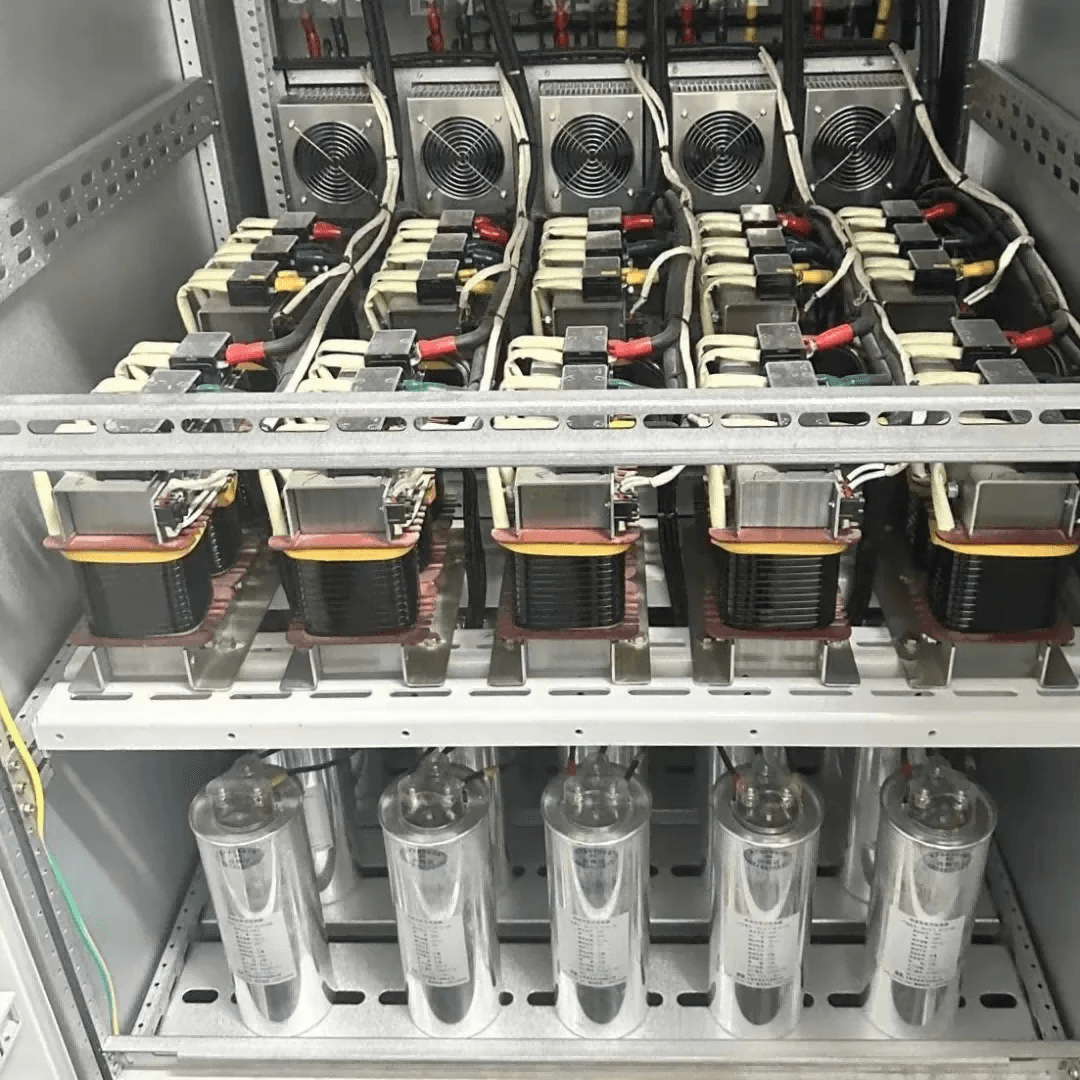
The selection of series reactors must be based on detailed grid data, including short-circuit current calculation reports, power flow distribution data, and load growth forecasts. It is necessary to avoid the blind selection of high-resistance reactors (which increase power loss) or low-resistance reactors (which fail to meet current limitation requirements). At the same time, priority should be given to products from manufacturers with mature manufacturing processes and rich engineering experience to ensure the reactor’s quality and reliability.
2. Routine Operation and Maintenance
To ensure the long-term stable operation of series reactors, the following maintenance measures should be implemented:
- Regular Monitoring: Use online monitoring systems to track the reactor’s operating temperature (core temperature ≤105℃), vibration amplitude (≤0.1mm), and insulation resistance (≥1000MΩ) in real time, and issue early warnings for abnormal data.
- Periodic Inspection: Conduct on-site inspections every six months, including cleaning surface dust and debris to ensure effective heat dissipation, checking the tightness of connecting bolts, and verifying the integrity of insulation materials.
- Parameter Calibration: Verify the reactive power compensation effect and grid voltage quality every year, and adjust the operation mode of low-voltage reactors promptly according to changes in grid conditions to maintain optimal reactive power balance.
3. Technological Trends
With the development of smart grid technology and power electronics, future series reactors will develop in the direction of intelligence, miniaturization, and low loss:
- Intelligent Monitoring: Integrate IoT sensors and edge computing technology to realize real-time monitoring of reactor operating status, fault diagnosis, and predictive maintenance, reducing manual inspection costs and improving operation reliability.
- Material Innovation: Adopt new magnetic materials such as amorphous alloy and nanocrystalline alloy to reduce the reactor’s core loss by 20-30% and reduce its volume and weight by 15-20%, improving installation flexibility and reducing land occupation.
- Modular Design: Adopt a modular structure to allow flexible combination of reactor capacity according to grid requirements, realizing rapid deployment and expansion, and adapting to the construction needs of smart grids and renewable energy integration.
V. Conclusion: Series Reactors Empowering Safe and Efficient 500kV Grids
Series reactors are indispensable core equipment for short-circuit current control in 500kV power grids, integrating the advantages of precise current limitation, minimal grid disturbance, economic efficiency, and strong scalability. Through scientific design of key parameters such as installation location, resistance value, rated current, and supporting reactive power compensation schemes, series reactors can effectively solve the short-circuit current overrun problem while ensuring the grid’s stable, safe, and economic operation.
As the power system continues to expand and renewable energy integration increases, the demand for short-circuit current control in 500kV and even higher-voltage power grids will become more urgent. Series reactors, with their mature technology and obvious advantages, will play an increasingly important role in the future grid construction. If your power grid faces challenges such as short-circuit current overrun, equipment operation pressure, or unreasonable power flow distribution, please feel free to provide detailed information such as grid voltage level, short-circuit current value, load characteristics, and core requirements. HengRong Electric CO., LTD. will customize an exclusive series reactor system design scheme for you based on professional simulation calculations and engineering experience, helping your power grid achieve safe, stable, and efficient operation.