
In modern power systems, Static Var Generators (SVG) serve as core equipment for dynamic reactive power compensation. Leveraging the advantages of fully-controlled power electronic devices, they can quickly and accurately balance grid reactive power and optimize power quality, being widely applied in industrial distribution networks, new energy power stations, urban power supply systems, and other scenarios. However, cascaded SVGs consist of multiple power units connected in series. Affected by factors such as load fluctuations and device parameter differences, they are prone to problems such as three-phase voltage imbalance and sub-module voltage deviation, which in turn lead to excessive SVG output harmonics, increased equipment losses, and even affect stable grid operation. This article focuses on the SVG DC-side voltage balance control technology, comprehensively explaining the design logic and actual operation effects of the two-layer voltage control strategy from control architecture design, core algorithm principles, simulation verification data, to engineering application practices, and fully demonstrating how SVG breaks through performance bottlenecks through precise voltage balancing control to achieve stable and efficient reactive power compensation.

I. SVG: The "Dynamic Balancer" for SVG Reactive Power Compensation in Power Systems
SVG is connected to the power grid through bridge converters, reactors, and filter devices. Based on Pulse Width Modulation (PWM) technology, it flexibly adjusts the phase and amplitude of the output voltage, thereby realizing the rapid absorption or injection of reactive power and effectively solving core pain points such as grid voltage fluctuations, low power factor, and three-phase imbalance. Compared with traditional capacitor-reactor compensation devices (SVC), SVG has more prominent core advantages, mainly reflected in the following three aspects:
1. Fast SVG Dynamic Response and High SVG Compensation Accuracy
SVG can quickly respond to grid reactive power fluctuations within 20ms. Compared with the response speed of more than 50ms of traditional compensation devices, it has significant advantages. It can stably increase the grid power factor from 0.7-0.8 to above 0.95, significantly reducing line losses and electricity costs. At the same time, SVG adopts a multi-level topology, and its output voltage waveform is closer to a sine wave. Its total harmonic distortion (THD) can be stably reduced to below 5%, far superior to the distortion level of more than 10% of traditional devices, greatly improving grid power quality and providing a high-quality power supply guarantee for precision industrial equipment and sensitive electronic loads.
2. SVG Adapts to Complex Working Conditions with Strong SVG Stability
SVG can accurately adapt to severe reactive power impacts generated by nonlinear loads such as frequency converters, rectifiers, and arc furnaces in industrial scenarios, as well as power output fluctuations brought by new energy power generation, such as wind power and photovoltaic power. Taking a 200MW wind farm as an example, during the initial grid-connection stage of the wind farm, the bus voltage fluctuation amplitude reached ±8% due to wind power output fluctuations, frequently triggering low-voltage ride-through alarms. After configuring a customized SVG device, through the rapid reactive power compensation and voltage support of SVG, the grid-connection voltage fluctuation amplitude was stably controlled within ±2%, effectively avoiding the risk of wind turbine disconnection caused by reactive power imbalance, and ensuring the stable grid-connection power generation of the wind farm and grid safety.
3. Core SVG Pain Point: Voltage Imbalance Restricts SVG Performance
For cascaded SVGs, the DC-side voltage balance of each power unit is a key prerequisite for ensuring its normal operation. If there is an obvious voltage deviation between each power unit, it will not only lead to inconsistent switching stress of core switching devices such as IGBTs, shortening the service life of the devices, but also cause problems such as increased SVG output waveform distortion and system oscillation, and even directly trigger equipment failure shutdown in severe cases. Traditional SVG control strategies mostly focus on improving the overall reactive power compensation accuracy, often ignoring the voltage balance control of each sub-module, resulting in a decrease of more than 30% in the actual compensation efficiency of SVG, which cannot give full play to its designed performance. Therefore, the research and development of efficient and reliable DC-side voltage balance control technology has become a core breakthrough to release the full performance of SVG and improve its operational stability.
II. SVG DC-Side Voltage Balance Control: Innovative Design of SVG Two-Layer Architecture
To solve the voltage imbalance problem of cascaded SVGs, the industry generally adopts a two-layer architecture design of "three-phase voltage balance control + unit voltage balance control", realizing precise voltage regulation from the system global to the module local, ensuring the coordinated and stable operation of each SVG power module, and giving full play to its dynamic reactive power compensation efficiency. The core logic of this two-layer control architecture is to balance the overall operational stability and local module balance of SVG through hierarchical regulation and gradual refinement. The specific design ideas are as follows:
1. First Layer: SVG Three-Phase Voltage Balance Control, Laying the Foundation for SVG Global Balance
The three-phase voltage balance of SVG is the foundation for ensuring the stable operation of the entire compensation system. The core goal of this level of control is to ensure that the amplitude and phase of the three-phase voltage output by SVG remain balanced, and to real-time adjust the current reference value through the PI controller to offset the voltage deviation between the three phases. Its specific control process and core logic are as follows:
- Collect the sum of the DC-side voltages of each phase power unit, compare it with the reference voltage, and calculate the deviation value;
- Use the PI adjustment algorithm (proportional coefficient Kp + integral coefficient Ki) to dynamically generate current reference signals, and adjust the output current of each phase to make the three-phase voltages tend to be consistent;
- Core logic: When the voltage of a certain phase is too high, increase the reactive power absorption of that phase; when the voltage is too low, increase the reactive power output to quickly balance the three-phase voltage difference.

2. Second Layer: SVG Unit Voltage Balance Control, Solving the Problem of SVG Local Deviation
On the basis of completing the SVG three-phase voltage balance control, it is necessary to further implement unit voltage balance control to accurately solve the problem of voltage deviation of sub-modules within each phase. This level of control adopts a modular regulation strategy to achieve refined voltage balance for multiple power units within each phase. The specific implementation steps are as follows:
- Calculate the average voltage of all sub-modules in a certain phase, compare the actual voltage of each sub-module with the average value, and obtain the deviation;
- Dynamically correct the modulation signal of each sub-module through the proportional link, adjust the IGBT switching state, and make the voltage of each unit approach the average voltage;
- Engineering data shows that this control strategy can control the sub-module voltage deviation within ±2%, which is far better than the ±5% of traditional control, and greatly reduces the loss of switching devices.
3. SVG Mathematical Model and Coordinate Transformation: Technical Support for SVG Control Accuracy
To achieve precise decoupling of SVG DC-side voltage balance control and ensure the rapidity and stability of voltage regulation, it is necessary to transform the SVG mathematical model from the three-phase stationary coordinate system (abc coordinate system) to the two-phase rotating coordinate system (d/q coordinate system). Through coordinate transformation, complex three-phase coupled variables can be converted into decoupled d/q axis components, which greatly simplifies the design difficulty of the control algorithm and improves the control accuracy. Its core implementation logic and technical value are as follows:
- Convert complex three-phase voltage and current components into d/q axis components through the coordinate transformation matrix, simplifying the control algorithm;
- Establish a power balance equation to ensure the dynamic matching between the DC-side voltage and the AC-side power, avoiding sudden voltage changes;
- Simulation verification: The SVG model built based on Matlab/Simulink has a 40% improvement in response speed after coordinate transformation, and the voltage regulation is more accurate.
III. Simulation Verification: SVG Performance Advantages of SVG Balance Control Strategy
To fully verify the effectiveness and superiority of the SVG two-layer voltage balance control strategy, we built an SVG simulation model containing 2 typical industrial loads (each with 200kW active power and 200kVar inductive reactive power) based on the Matlab/Simulink simulation platform. The core parameters of the simulation model are set as follows: grid-side voltage 2kV, system frequency 50Hz, SVG sub-module capacitor 5000μF, series reactor 40mH. By simulating typical working conditions such as normal operation and load sudden change, the voltage balance effect, compensation efficiency and dynamic stability of SVG were comprehensively tested. The test results are as follows:
1. Significant SVG Voltage Balance Effect
When the two-layer voltage balance control strategy is not enabled, the maximum three-phase voltage deviation of SVG reaches 8%, and the maximum voltage deviation of sub-modules within each phase is as high as 12%, far exceeding the engineering allowable range of ±5%, leading to serious over-standard SVG output harmonics. After enabling the two-layer voltage balance control, the three-phase voltage deviation of SVG quickly drops to within 1.5%, and the voltage deviation of each sub-module is accurately controlled within ±2%, fully meeting the engineering operation requirements, and effectively ensuring the safe operation of SVG core devices and the quality of output waveform.
2. Greatly Improved SVG Reactive Power Compensation Efficiency
After the SVG equipped with two-layer voltage balance control is put into operation, the grid power factor quickly increases from 0.71 to 0.99, and the reactive power in the grid drops significantly from 400kVar to below 10kVar, realizing precise compensation of reactive power. At the same time, benefiting from the optimization of SVG output waveform, the total harmonic distortion of the grid output voltage drops from 7.8% to 3.2%, which fully complies with the relevant requirements of the national standard GB/T 14549-1993 "Power Quality - Public Grid Harmonics", providing a strong guarantee for the safe and efficient operation of the power grid.
3. Strong SVG Dynamic Stability
To test the dynamic adaptability of SVG, a sudden load change scenario was simulated in the simulation, that is, the reactive power in the grid suddenly increased from 200kVar to 400kVar in a very short time. The test results show that the SVG equipped with two-layer voltage balance control can quickly complete the DC-side voltage adjustment within 0.1s, and there is no oscillation during the entire adjustment process. The maximum fluctuation of the DC-side voltage is less than 3V, which is far better than the maximum fluctuation of 8V under the traditional control strategy. It fully shows that SVG has strong dynamic anti-interference ability and can stably cope with various load fluctuations in the power grid.
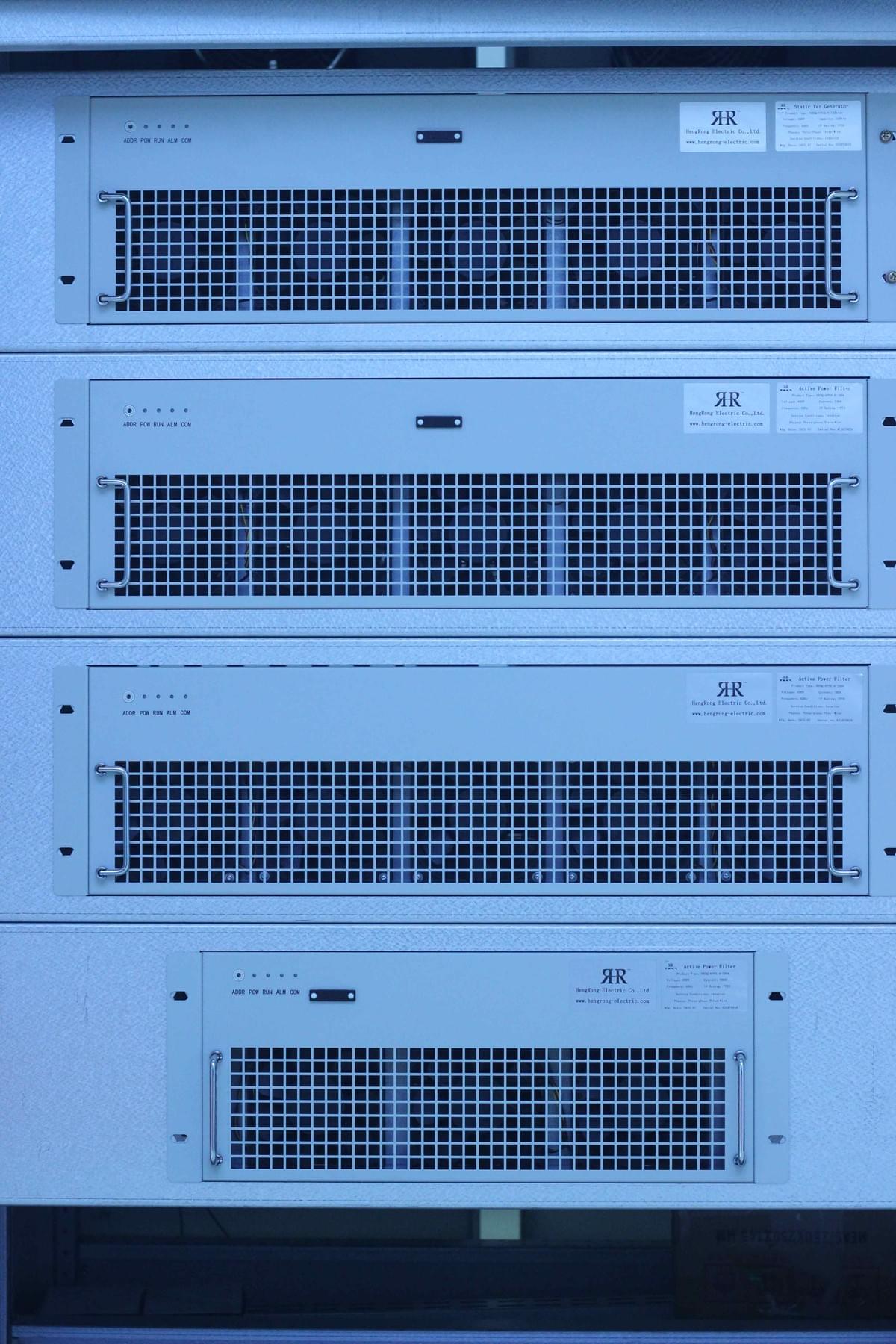
IV. SVG Engineering Application and Precautions of SVG Balance Control
1. Core SVG Application Scenarios
Industrial Distribution Networks: In industrial scenarios such as iron and steel, the chemical industry, and metallurgy, a large number of nonlinear loads will generate severe reactive power fluctuations, leading to unstable grid voltage. SVG can quickly respond to such reactive power fluctuations, stabilize the bus voltage, improve power quality, ensure the normal operation of industrial production equipment, and reduce the risk of production failures caused by voltage fluctuations;
New Energy Grid Connection: New energy power generation such as wind power and photovoltaic power, has significant volatility and intermittency. During the grid connection process, it will inject a large amount of reactive power into the grid, affecting grid stability. SVG can accurately balance the reactive power imbalance caused by new energy power generation, improve the grid's ability to absorb new energy power, and promote the efficient consumption of new energy;
Urban Distribution Networks: With the continuous growth of urban electricity load, especially during the peak electricity consumption periods in summer and winter, voltage sag problems are prone to occur, affecting residents' normal electricity use. SVG can quickly provide reactive power support during peak load periods, alleviate voltage sags, improve residents' electricity quality, and enhance the power supply reliability of urban distribution networks.
2. Key Points for SVG Selection, Operation and Maintenance
Selection Adaptation: The selection of SVG must be strictly combined with the grid voltage level, actual reactive power compensation capacity requirements andto implement unit voltage balance control further load characteristics. Reasonably select the number of SVG sub-modules and core device parameters to ensure that the voltage regulation range of SVG can fully cover the actual operation requirements, and avoid insufficient performance or resource waste caused by improper selection;
Parameter Calibration: The PI controller parameters of SVG DC-side voltage balance control directly affect the regulation effect. It is necessary to regularly verify and optimize the proportional coefficient Kp and integral coefficient Ki according to the grid load changes, so as to avoid the decrease of control accuracy caused by parameter mismatch and ensure that SVG is always in the optimal operating state;
Condition Monitoring: Build a complete SVG operation condition monitoring system to real-time collect key parameters such as the DC-side voltage of each sub-module, IGBT device temperature, and output current. Once abnormal parameters are found, immediately trigger an alarm and record fault information, facilitating operation and maintenance personnel to quickly troubleshoot faults and reduce the risk of fault expansion; to sudden load the sudden voltage
Environmental Adaptation: The core components of SVG have high requirements for the operating environment. The installation location should be far away from harsh environments such as dust, humidity, and corrosive gases. At the same time, ensure unobstructed heat dissipation of the equipment to avoid voltage regulation abnormalities or component damage caused by environmental factors such as high temperature and high humidity.
3. SVG Technology Trend: Intelligence and Integration
With the transformation of power systems towards intelligence and cleanliness, SVG will continue to develop towards intelligence and integration in the future. In terms of intelligence, SVG will deeply integrate AI algorithms and Internet of Things (IoT) technology, realize predictive regulation of voltage deviation by learning the change rules of grid load, adjust control parameters in advance, and further improve the response speed and compensation accuracy of SVG; in terms of integration, SVG will adopt modular and compact design, simplify equipment installation and operation and maintenance processes, and realize in-depth linkage with the grid dispatching system, improve the overall regulation capacity of the grid, and adapt to more complex grid operation scenarios.
V. Conclusion: SVG Voltage Balance Control Empowers SVG Reactive Power Compensation Upgrade
SVG DC-side voltage balance control is the core technology to ensure its stable and efficient operation. The "three-phase voltage balance + unit voltage balance" two-layer control strategy proposed in this article completely solves the voltage imbalance pto troubleshoot faults and reduce the risk of fault expansion quickly at the point of cascaded SVG through the design idea of hierarchical regulation, realizing the dual improvement of SVG reactive power compensation accuracy and system operation stability. A large number of simulation data and engineering practices show that SVG equipped with this control strategy can effectively cope with various complex working conditions and significantly optimize grid power quality. Against the background of the transformation of power systems towards high efficiency, cleanliness and intelligence, SVG, with its advanced control technology and excellent operating performance, is gradually replacing traditional reactive power compensation devices and becoming the preferred equipment in the field of grid reactive power compensation.

If your power grid is facing problems such as reactive power imbalance, voltage fluctuation, and excessive harmonics that affect the normal operation of equipment and power quality, please feel free to inform us of key information such as system voltage level, load type, and reactive power compensation capacity requirements. Relying on our professional SVG technology R&D team and rich engineering practice experience, HengRong Electric CO., LTD. will customize an efficient SVG solution equipped with DC-side voltage balance control for you, helping your power grid achieve safe, stable and efficient operation and improve the overall power supply quality!